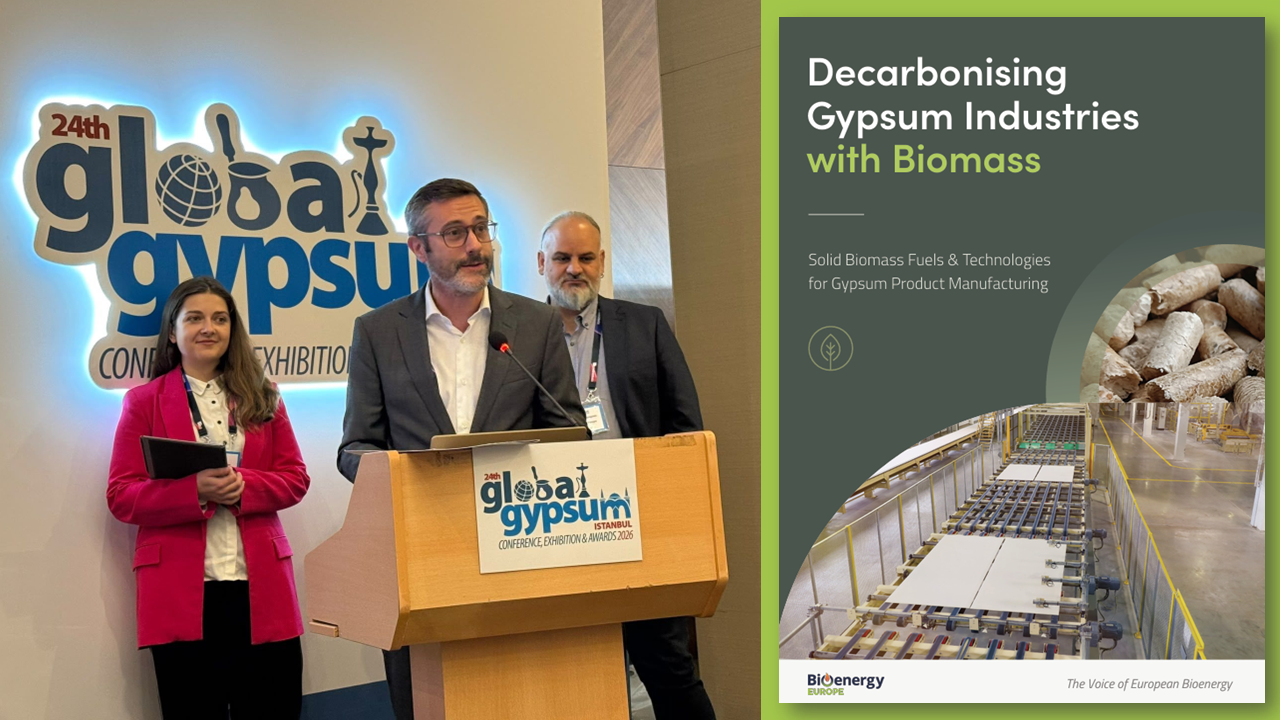
On 14 October, Manolis Karampinis from Bioenergy Europe presented the publication alongside Tristan Suffys and Alicja Szambelan from Eurogypsum. Developed by Bioenergy Europe with contributions from Eurogypsum, the brochure explores the potential of solid biomass fuels in gypsum manufacturing, from available technologies to practical considerations for industrial deployment.
The initiative responds to a concrete challenge. Manufacturing accounts for about 69% of plasterboard’s carbon footprint and 55% of plaster’s, with fossil fuel use for industrial heat a major source of emissions.
As Tristan Suffys, Secretary General of Eurogypsum, explains in the brochure: "Achieving deep emissions reductions will require a combination of pathways rather than a single technology."
Alongside electrification, energy efficiency, and renewable gases, sustainable biomass can help replace fossil fuels in industrial heating processes.
For Gustav Melin, Chairman of WTS AB and Bioenergy Europe’s Working Group Industry, and Senior Advisor at BKtech Group, the technology is already within reach: "The technologies to replace fossil fuels with solid biomass fuels are already available, proven and operating successfully in industry today."
Renewable heat for gypsum manufacturing
Gypsum manufacturing requires reliable, controllable heat, particularly during calcination and drying, two essential production stages.
Calcination, which transforms gypsum into plaster powder, typically requires temperatures of around 150–180°C. Drying plasterboards occurs at about 200°C and is one of the most energy-intensive manufacturing stages.
These processes currently rely largely on natural gas, but commercially available biomass technologies can provide the thermal energy they need.
The new brochure identifies two main solutions:
- Multifuel burners, which can use finely ground biomass, such as wood powder, to replace fossil fuels in industrial heating processes while maintaining precise temperature control.
- Biomass boilers, which can use a wider range of solid biomass fuels to generate hot air, hot gases or steam, particularly for indirect heating applications.
A range of fuels can support this transition. Wood pellets offer consistent quality and have established international supply chains, while wood chips and agricultural residues, including olive stones, straw and nut shells, can provide additional options depending on local availability and production requirements.
A practical pathway towards fossil-free industrial heat
Replacing fossil fuels with sustainable biomass can help gypsum manufacturers reduce fossil carbon emissions, diversify their energy supply and limit exposure to carbon-related costs.
The business case depends on local conditions, including fuel availability, existing infrastructure, technology integration and long-term supply arrangements. Compliance with EU sustainability requirements is also essential.
By bringing together expertise from the bioenergy and gypsum industries, the new publication aims to help manufacturers assess these opportunities and identify solutions adapted to their production sites.
Decarbonising industrial heat requires solutions that can be deployed today. Sustainable biomass offers gypsum manufacturers an established option to move away from fossil fuels while supporting European industry’s competitiveness.
Read the full brochure, Decarbonising Gypsum Industries with Biomass, to explore the available fuels, technologies and practical considerations for gypsum manufacturing.
Related Posts
-
European regions join forces to strengthen wood energy across Europe
September 10, 2026