
European regions join forces to strengthen wood energy across Europe
A new regional network is putting wood energy on the European agenda. Launched in Brussels on 9 September, the Wood Energy Regions Network (WERN) brings together regions that see sustainable wood energy as part of the answer to Europe’s energy security, climate and resilience challenges.
What is WERN, the Wood Energy Regions Network?
The Wood Energy Regions Network (WERN) is a new cooperation platform launched by Bavaria, Styria, Castilla-La Mancha and Castilla y León.
Its purpose is to bring regions together around the opportunities offered by wood energy, from renewable heating and power and greater energy resilience to sustainable forest management and stronger rural economies.
This regional perspective matters. Europe’s territories differ significantly in their forests, energy systems and local needs. WERN creates a space to share experience, strengthen cooperation and ensure that these regional realities are part of the European discussion on energy transition.
The network gives regions that recognise the value of local biomass resources a stronger collective voice, while creating an opportunity for learning from one another. For the bioenergy sector, the creation of the Wood Energy Regions Network is a welcome development and we hope more European regions will engage in the near future.
Four regions start the conversation

The network was officially launched at the Representation of the Free State of Bavaria to the European Union, with political representatives from each of its four founding regions:
- Bavaria: Tobias Gotthardt, Vice Minister at the Bavarian Ministry of Economic Affairs, Regional Development and Energy
- Styria: Simone Schmiedtbauer, State Councillor for Agriculture and Energy
- Castilla-La Mancha: José Almodovar Aráez, Deputy Regional Minister for the Environment
- Castilla y León: Jorge Llorente Cachorro, Deputy Regional Minister for the Environment and Energy
Together, they highlighted the potential of wood energy from four different regional perspectives, showing that there is no single model for Europe. Local resources can support locally adapted solutions.
As Tobias Gotthardt put it:
"Wood energy plays an indispensable role in the heat and energy transition in Bavaria. It is a decentralised and therefore resilient source of energy. Energy wood is available locally and creates added value in our regions. We want to share these strengths with our European partners in the EU and expand it."
From Castilla y León, Jorge Llorente Cachorro similarly stressed the value of locally available forest resources:
“Forest biomass is a renewable, local, storable and manageable resource.”
He also stressed that biomass should not be seen as an end in itself, but as a tool for forest management, with benefits for rural development, wildfire prevention and European energy security.
Wood energy is already part of Europe’s regional energy system
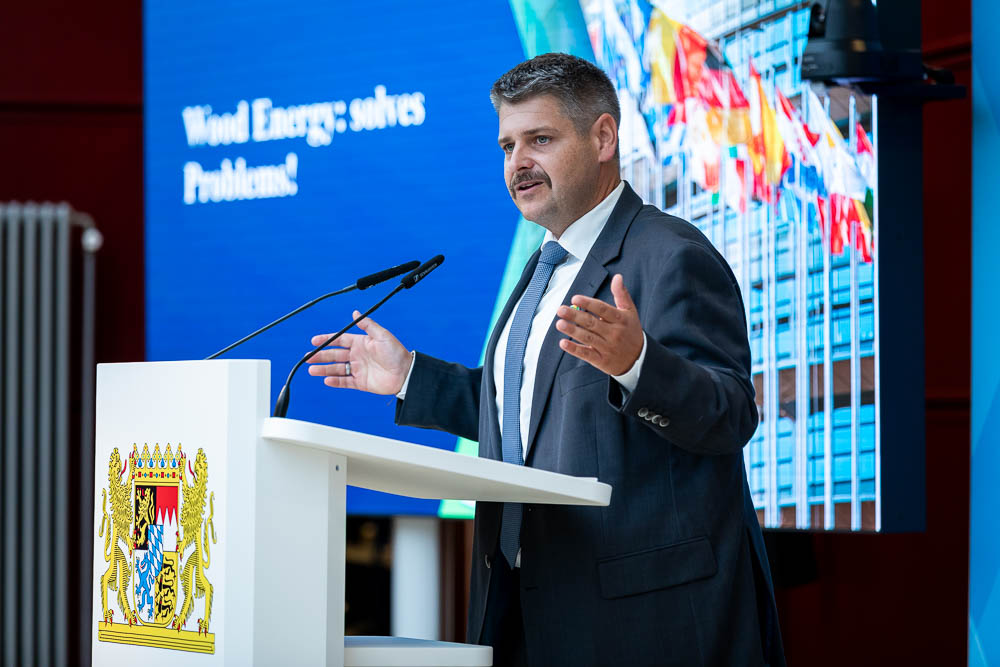
Bioenergy Europe President Christoph Pfemeter highlighted how important wood energy already is for many European regions, supporting local energy systems, economies and forest management.
“Wood energy solves a lot of the problems we have now,” said Christoph Pfemeter.
At European level, bioenergy may appear to play a relatively modest role in the overall energy mix. But this can hide major regional differences. In some regions, bioenergy already meets up to one third of energy needs. European policy should recognise these realities and ensure that bioenergy’s contribution is properly reflected in the energy transition.
WERN’s founding regions show what this means in practice: in Bavaria, wood heats around 2 million homes, or almost one fourth of households; in Styria, where forests cover 62% of the territory, wood already provides 22% of energy needs; Castilla y León has around 5 million hectares of forest and produces roughly one third of Spain’s pellets; while Castilla-La Mancha highlighted the importance of active forest management in regions exposed to wildfire risk.
How can Europe unlock the full potential of wood energy?
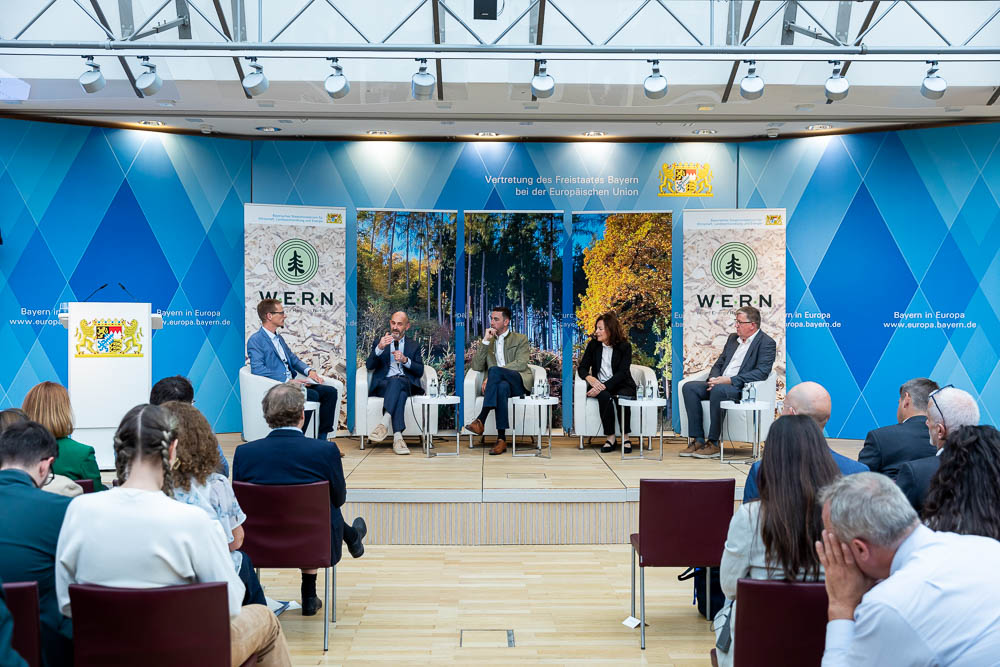
The launch was followed by an expert discussion on the wider European potential of wood energy.
Alexander Bernhuber MEP (EPP); Eric van den Heuvel, Technical Coordinator at IEA Bioenergy; Marlene Mortler, Chairwoman of the German Biomass Association; and Andreas Steinegger, President of the Styrian Chamber of Agriculture, looked at what is needed to unlock more of wood energy’s potential across Europe.
One point came through particularly strongly: too much bureaucracy can hold back sustainable development at regional level. Local authorities and local economic actors should be trusted to make the most of the resources available in their regions.
“Regions demonstrate every day the contribution wood energy makes to climate action, the heating transition, security of supply and regional value creation,” said Marlene Mortler, Chairwoman of the German Biomass Association.
For Bioenergy Europe, WERN is also an opportunity to connect European policy with the concrete effect of European Policy on the ground. Regions are where forest resources are managed, heating systems are deployed and many of the economic benefits of bioenergy are felt.
The launch of Wood Energy Regions Network (WERN)is a starting point. By bringing together regions with experience, resources and ambition in wood energy, the network can help turn local success stories into a stronger European movement for sustainable bioenergy.
Want to know more about WERN and the thinking behind the new network? Watch the presentation of the Wood Energy Regions Network: W.E.R.N. | Wood Energy Regions Network – Bayern