06
Nov
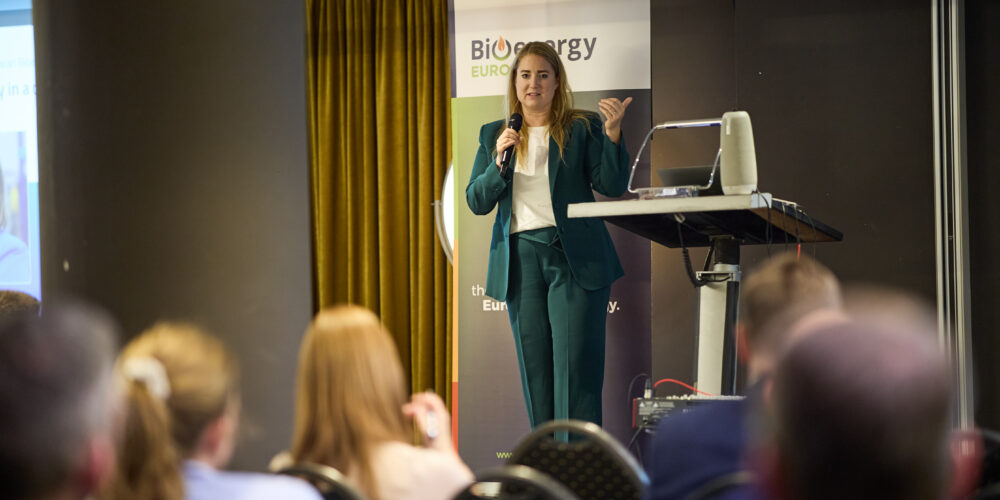
European Bioenergy Future 2025: Bioenergy at the Heart of Europe’s Energy Transition
“Let this mandate be the time when we finally bridge the mistrust in bioenergy and build a foundation for this sector to finally contribute with what it's been offering for decades.” Said Wiesner “Bioenergy is and continues to be a vital part of the transition to fossil free societies, it's about time we take that opportunity."
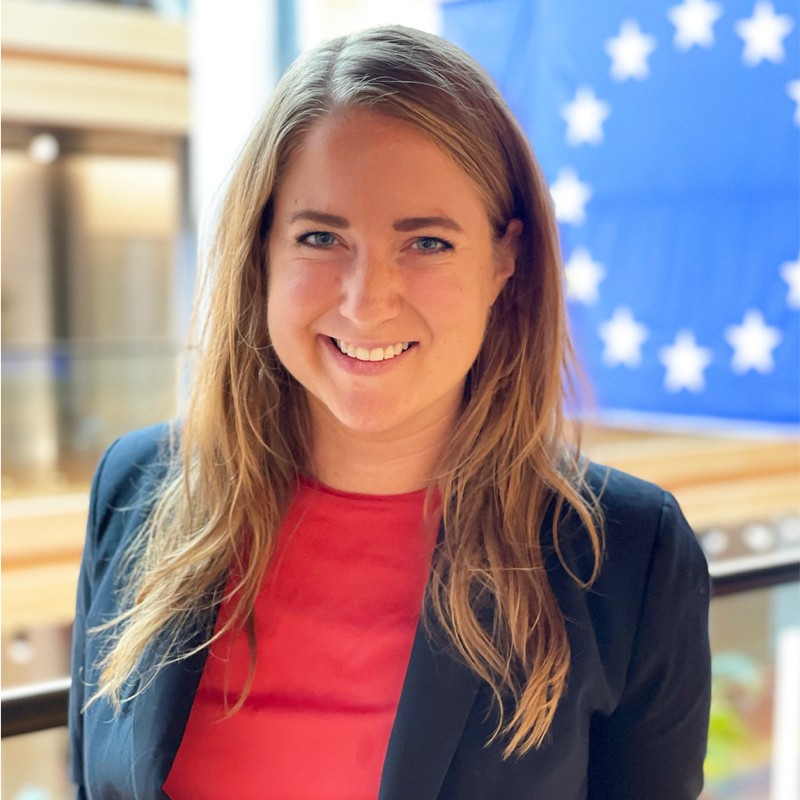
Emma Wiesner
Member of the European Parliament (Renew Europe, Sweden)
“Our industry stands as one of Europe’s true industrial strengths driven by innovation and sustainability. But growing policy volatility from carbon markets and inconsistent regulation demands adaptability. If we transform that volatility into opportunity, by fostering flexibility and trust, Europe will maintain its leadership”
Nicholas
CEo of Graanul Invest
On day 1, speakers from RISE Research Institute of Sweden and Elimini, addressed how innovation and policy can accelerate decarbonisation. Then, in a special session of Bioenergy Europe’s Working Group on Sustainability, experts from Bioenergy Europe, the Bioenergy Association of Finland and Austria and Drax Group shared insights on biodiversity safeguards and the carbon footprint of wood energy.
The closing debate on cascading use moderated by Azadeh Daheshmand, Regulatory Affairs Manager at Uniper and chair of the Working Group on Sustainability, was joined by high level representatives from CEPI, Södra, and the German Bioenergy Association. The panel discussion highlighted the importance of maintaining flexibility in biomass use while ensuring sustainability and efficiency.
Christoph Pfemeter, President of Bioenergy Europe and Managing Director of the Austrian Biomass Association, stressed the strategic role of sustainable bioenergy in Europe’s heating transition:
“Relying on electricity alone will not make our energy system stable or affordable. Without a strong contribution from bioenergy, electricity prices will continue to rise, undermining both industry and households and, ironically, making electrification itself more difficult.”
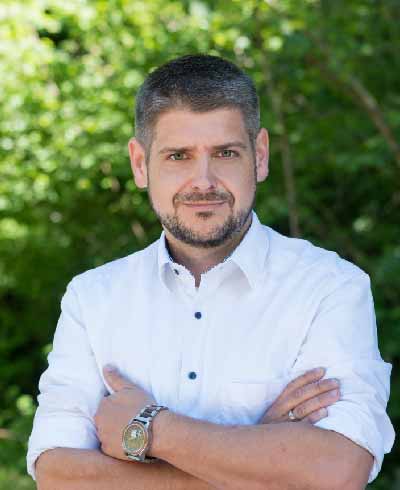
Christoph Pfemeter
President of Bioenergy Europe and Managing Director of the Austrian Biomass Association
Day 2 focused on industrial decarbonisation, showcasing practical examples of how biomass fuels are already replacing fossil energy in manufacturing. Companies such as BKtech Group, Justsen Energiteknik A/S, ENGIE, and KNAUF Iberica presented case studies demonstrating that renewable heat from biomass can reduce emissions and energy costs without compromising performance or reliability.
The session also featured Eurogypsum, representing the European gypsum industry, highlighting the growing interest of energy-intensive sectors in renewable heat solutions. This meeting marked the first in a series of future initiatives where Bioenergy Europe will facilitate dialogue between bioenergy technology providers and industrial sectors committed to decarbonising their energy use and processes.
The event concluded with remarks from Jean-Marc Jossart, Secretary General of Bioenergy Europe, who reaffirmed the sector’s readiness:
"EBF 2025 once again demonstrated the depth and diversity of the bioenergy community. Europe has the technologies, the know-how, and the determination to deliver on the energy transition"
Jean-Marc Jossart
Secretary general of Bioenergy Europe
Related Posts
No related photos.